Road Trip 3 Lindisfarne Priory
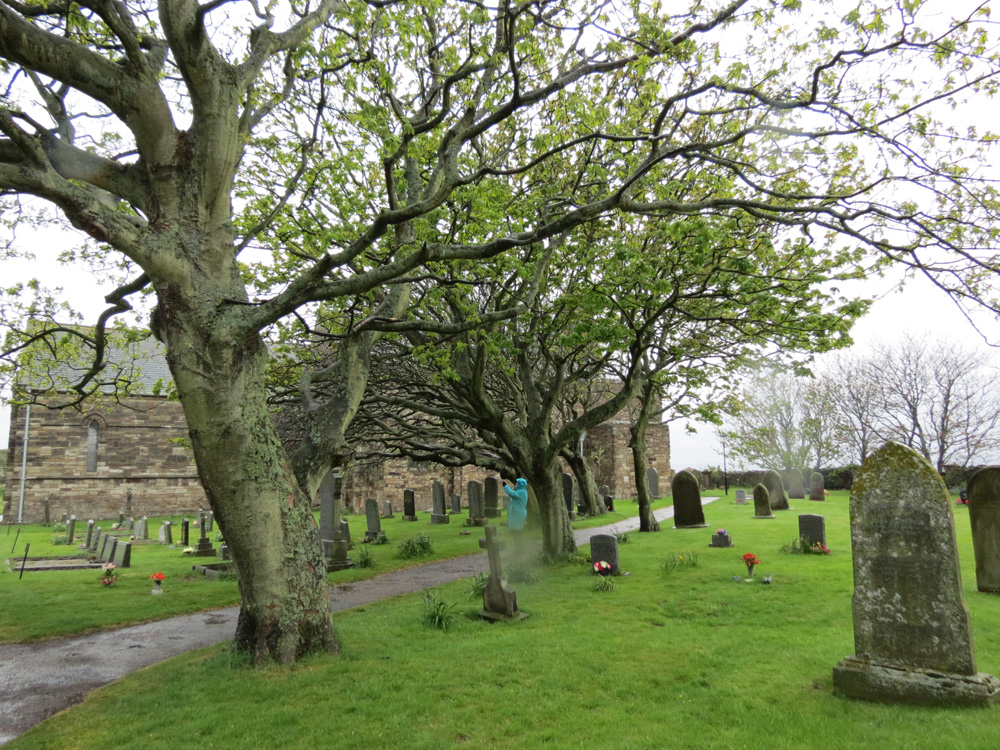
On the far side of the village (on the south of Holy Island) is the site of the Anglo Saxon monastery.
There is now a Norman priory on the site.
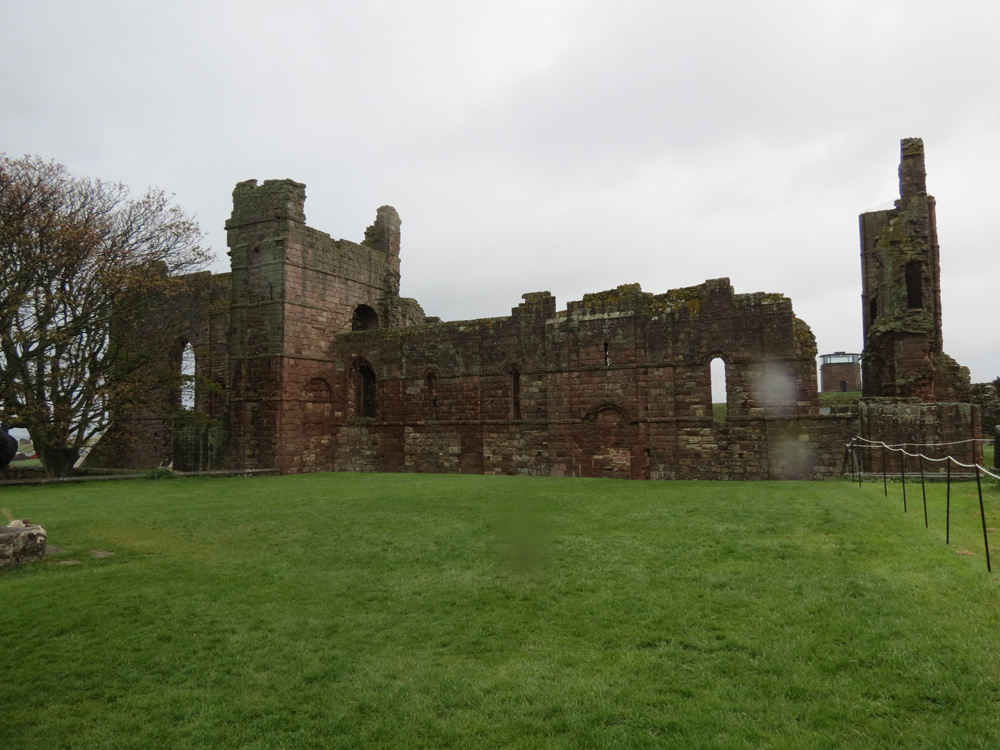
You’ve all heard of the Lindisfarne Gospels 700 AD. They were created here.
You can turn the pages on this site. Aren’t the illustrations amazing!
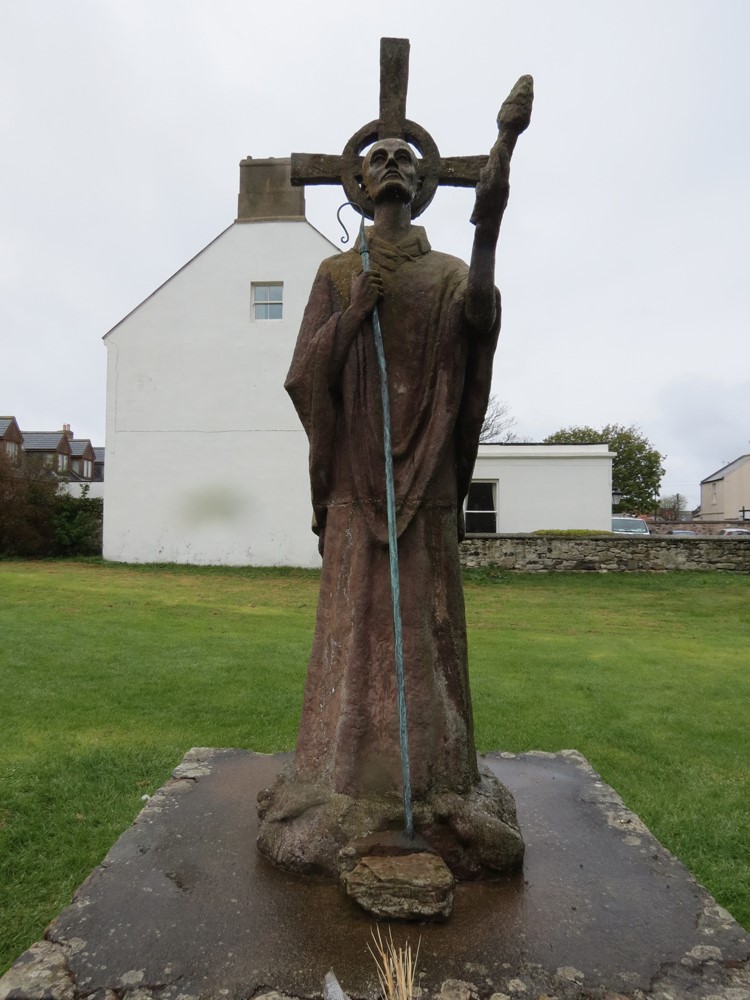
Modern statue of St Cuthbert facing the priory.

View of Lindisfarne Harbour from the priory.
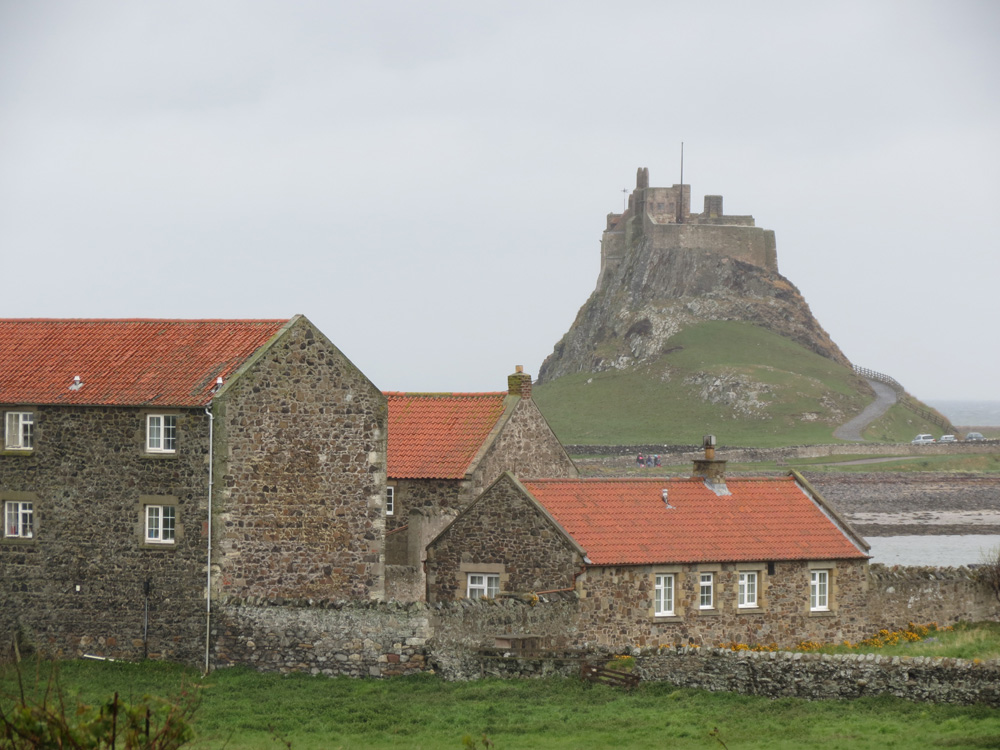
Lindisfarne Castle. What an amazing defensive site! It needed to be as this area was often the scene of Scots and Viking raids.

But let us look at the priory ruins.
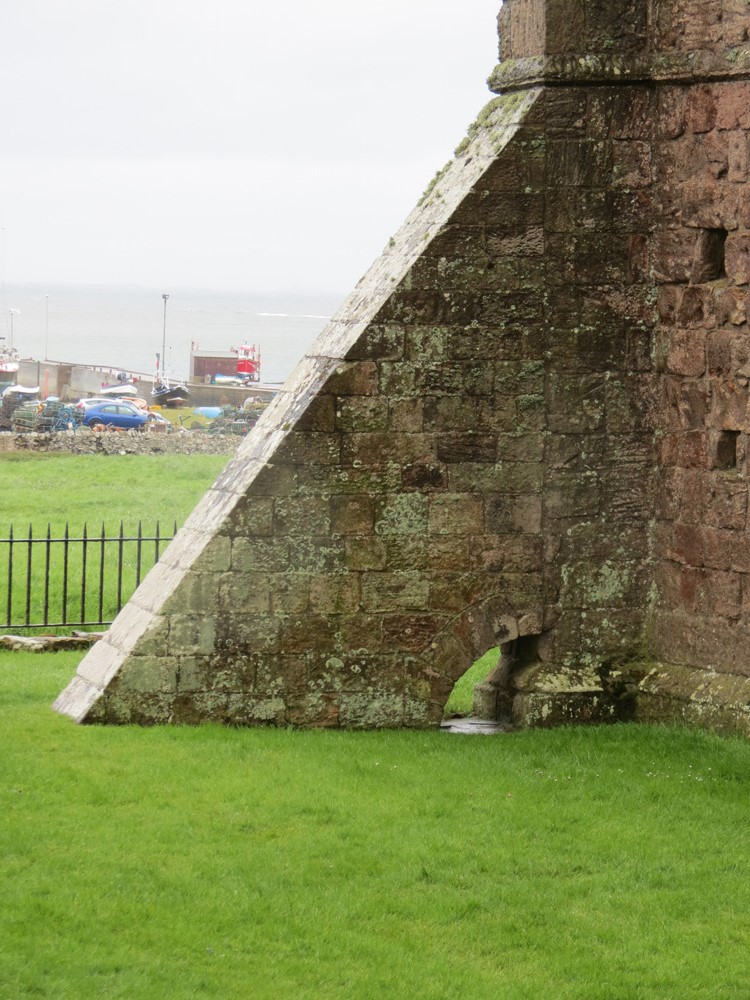
Not quite a flying buttress. This dates from 1150AD. To put it into context, it was being finished as Notre Dame in Paris was starting to be built, which had proper flying buttresses added for support.
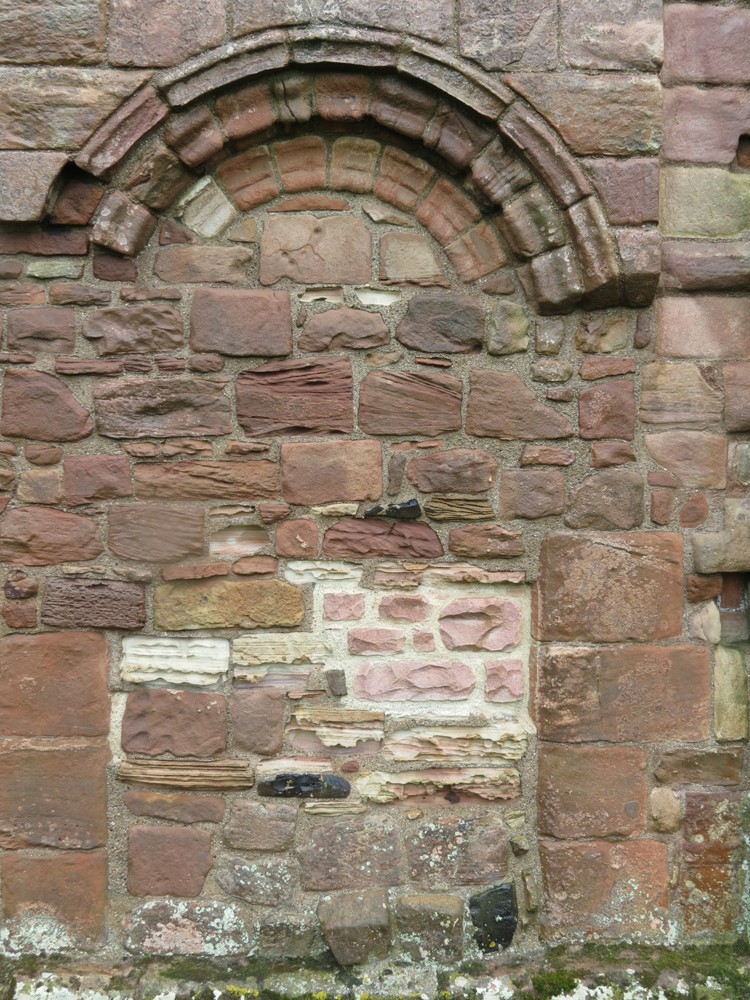
Blocked doorway with Romanesque arch.
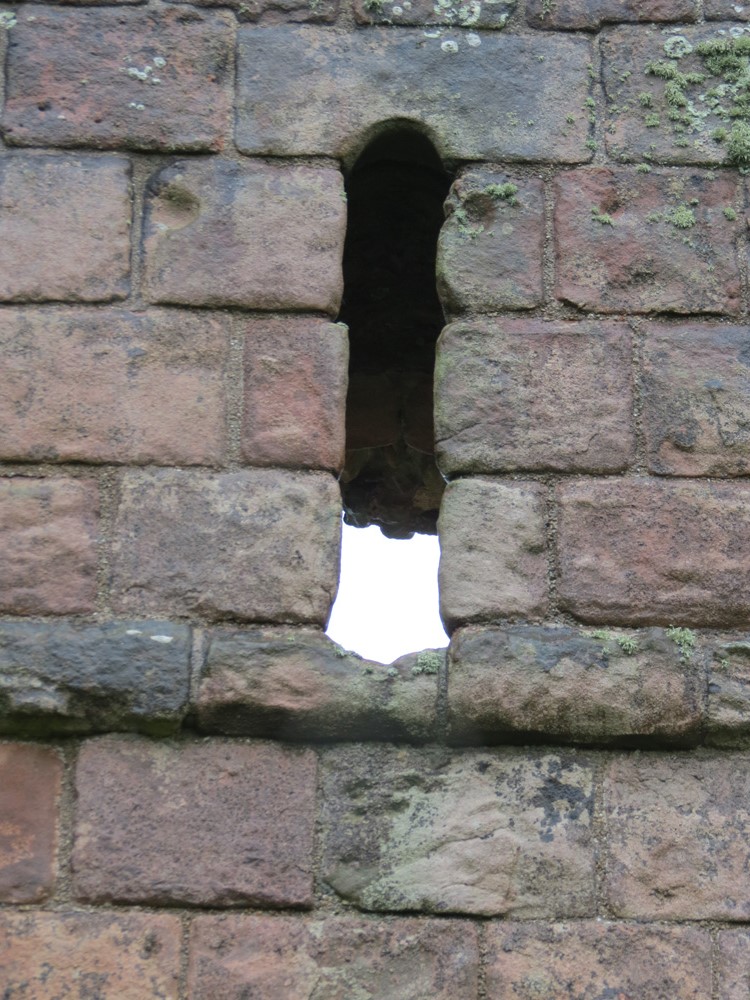
These arrow slits were added high on the towers in the 1300s AD to help protect the priory against the Scots during the wars I mentioned in my previous blog post.
Later arrow slits had a cross shape so you could follow your enemy with your weapon across a wider area.

The holes at the side of this window are for the iron bars which support a leaded window.
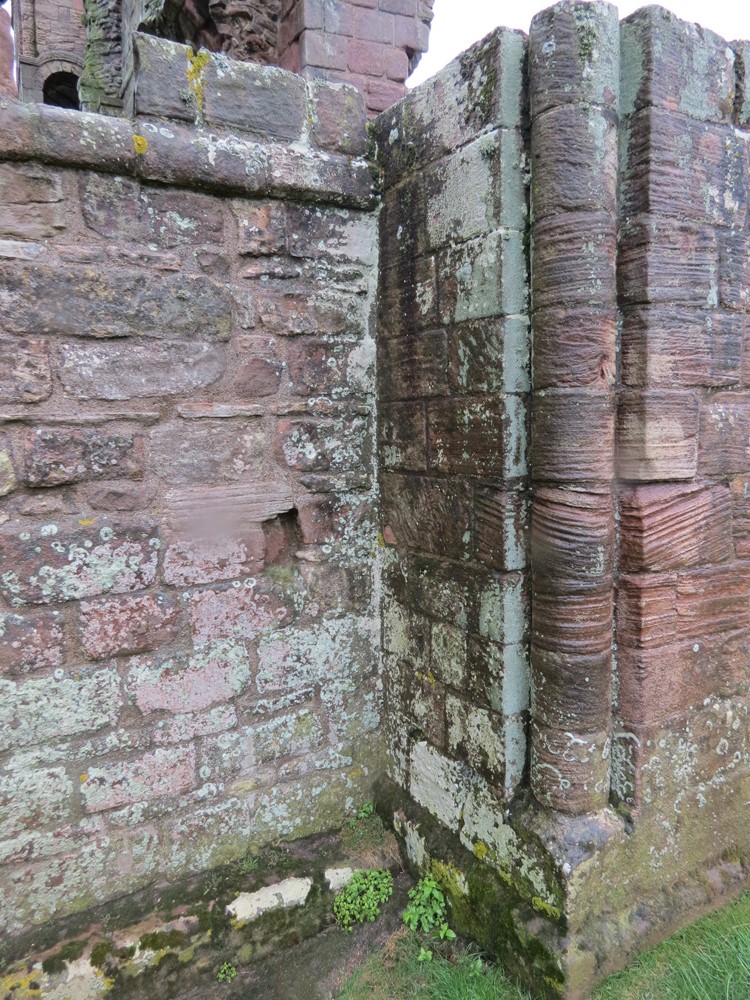
Pillar decoration carved into the corner stones. This is a big departure from Anglo Saxon architecture which had long and short quoin stones in the corners like you see at St Michael’s Tower in Oxford also from 1050AD.

This is what it looked like after completion. I think it is probable that it was designed by a Norman architect and most likely built by Norman masons. With some buildings you can see that they have been designed by a Norman architect, but the masons were Anglo-Saxon, as they have added more traditional decorations.

Click to read.

Shaft of Celtic style cross.
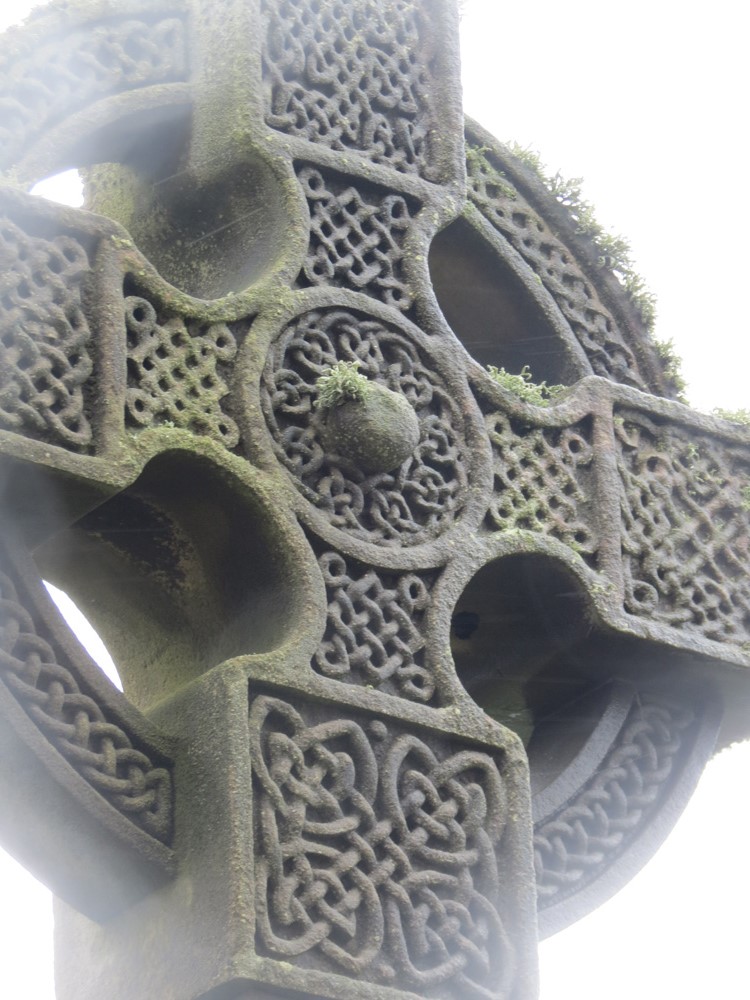
I thought this photo would make an excellent card design.

The cross stands just outside the main entrance to the priory.
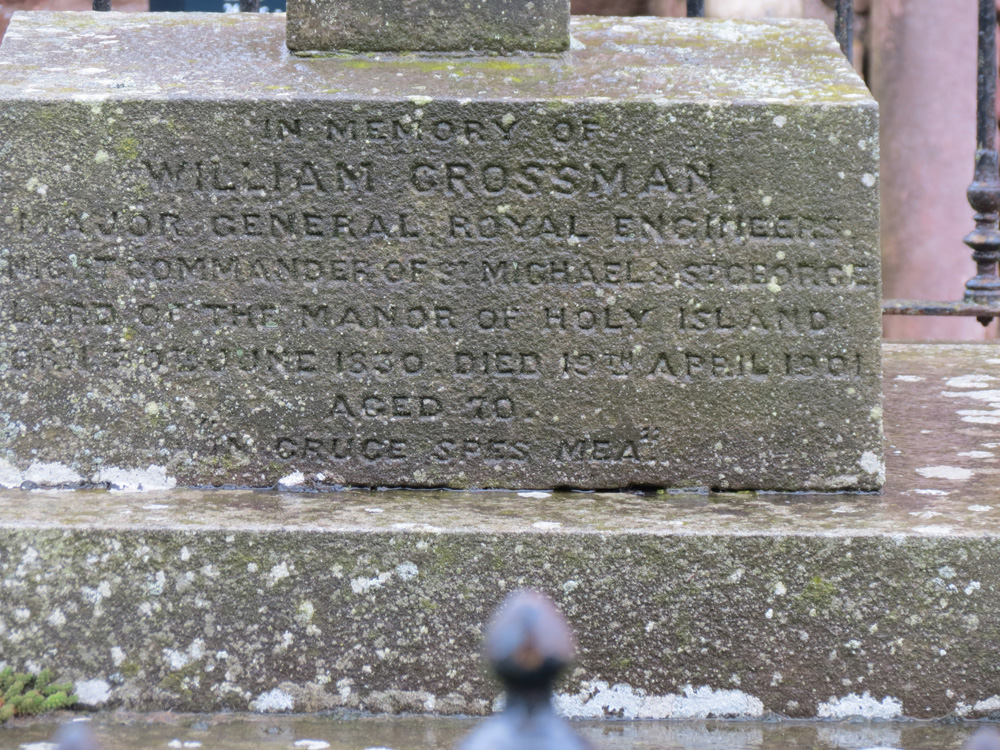
In Memory of
William Grossman
Major General Royal Engineers
Night Commander of St Michael and St George
Lord of the Manor of Holy Island
Born 30th June 1830, died 19th April 1901
Aged 70
“in cruce spes mea”
(My hope is in the cross.)

A typical early Norman “zig zag” arched doorway.
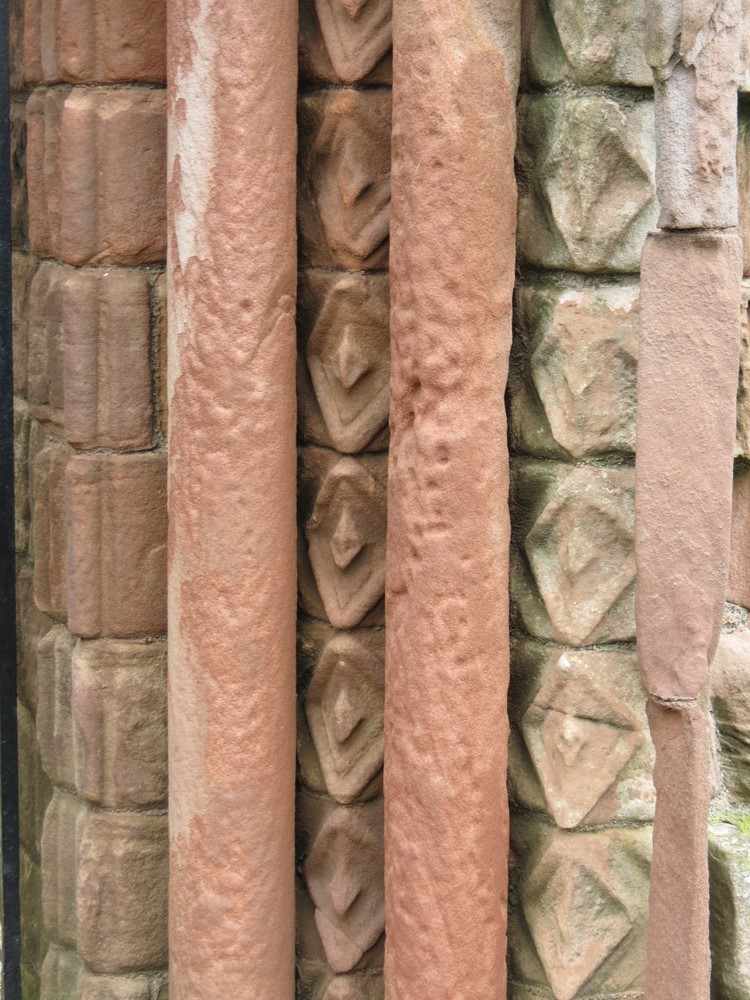
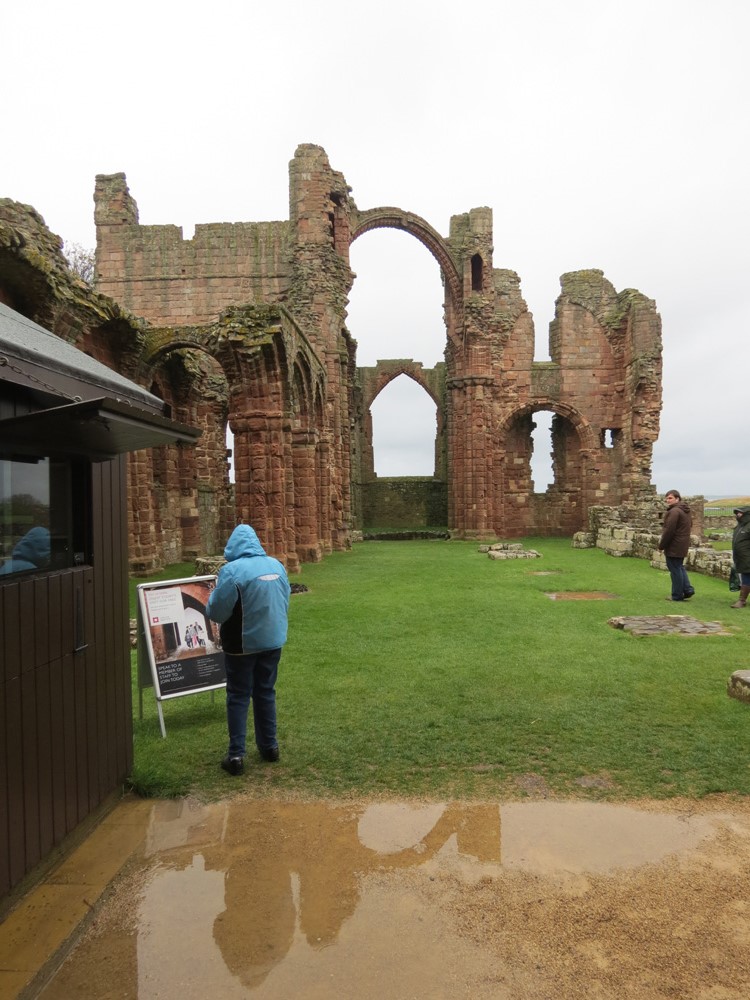
At this time the Christian church was led world wide from Rome, so churches were built in what was thought to be a Christian form of architecture with rounded arches which is the style of the 1st Christians from ancient Rome. This was later to change in favour of the Gothic which allowed for wider spaces to be traversed with cross vaulting on taller and narrower pillars.

This in turn led to churches being built taller and more awe inspiring than previously.
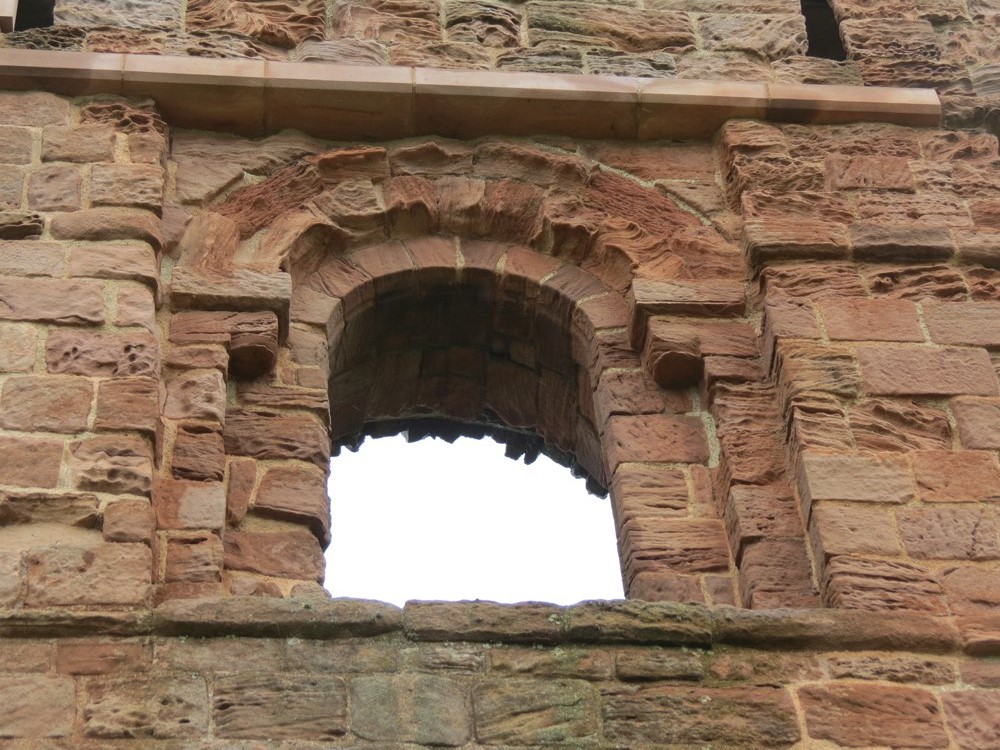
Close up of rounded arch window.
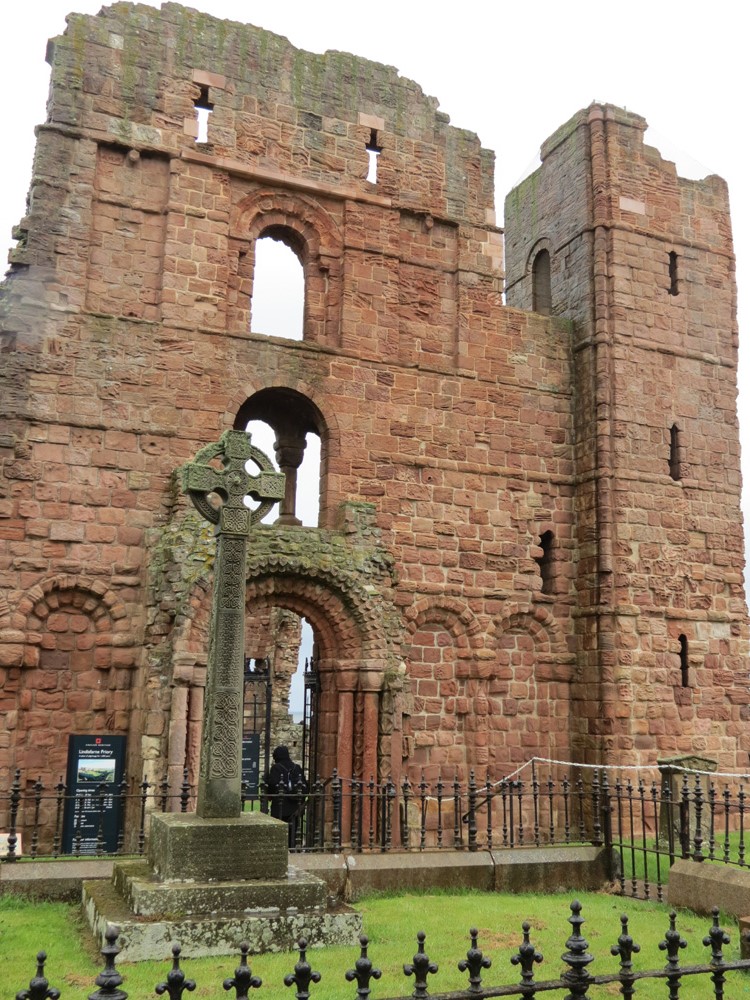
So as you can see what is left of the priory (stones went to the castle) is a product of its time, designed to impress and also stamp the area with the new Norman ownership, not just militarily, but also religiously.
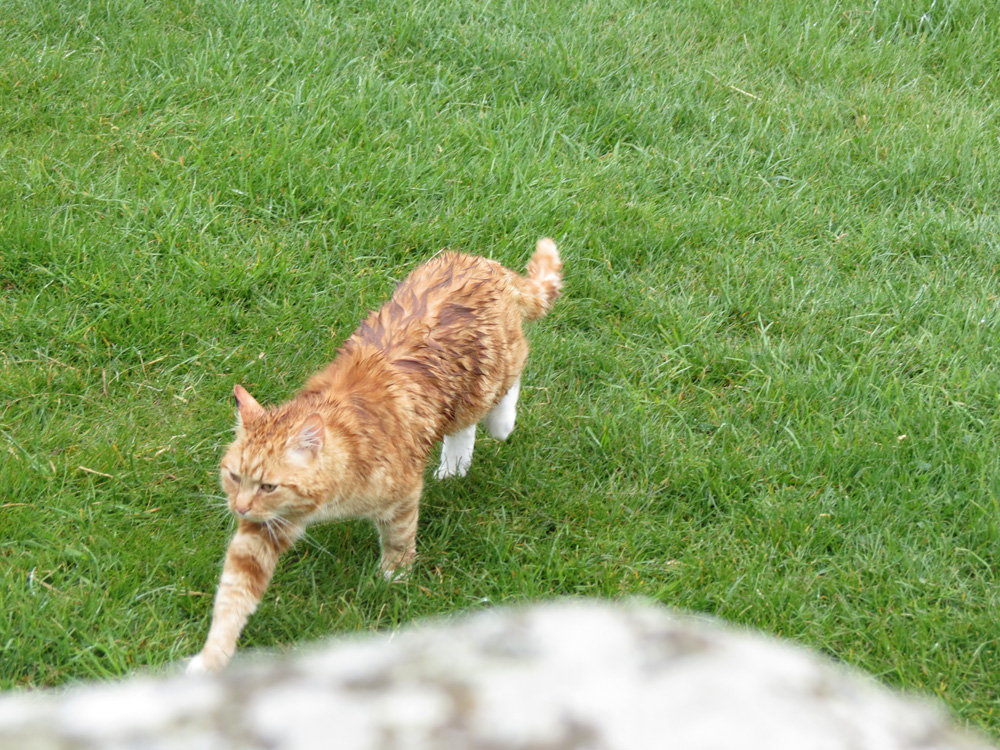
This soaked cat made me think of Tracy’s Charlie.
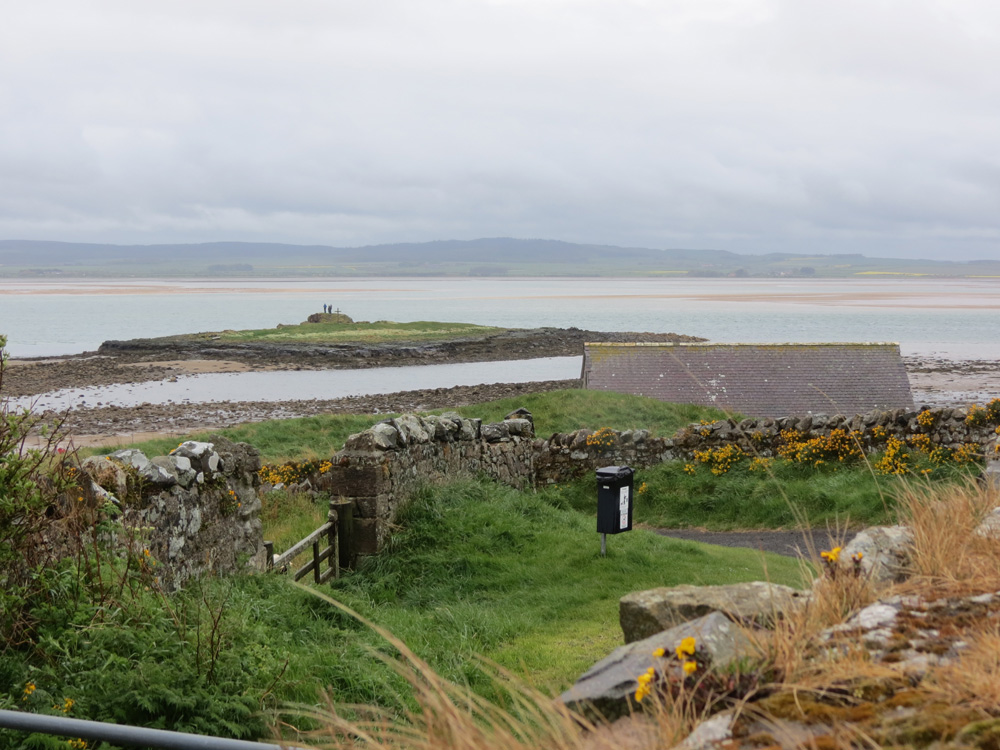
This site is ideal for a religious order as it is separated from secular life. You can see the mainland and get supplies which you can’t grow, but the causeway means you are living a separate life dedicated to God.
View of the Northumbrian mainland above.
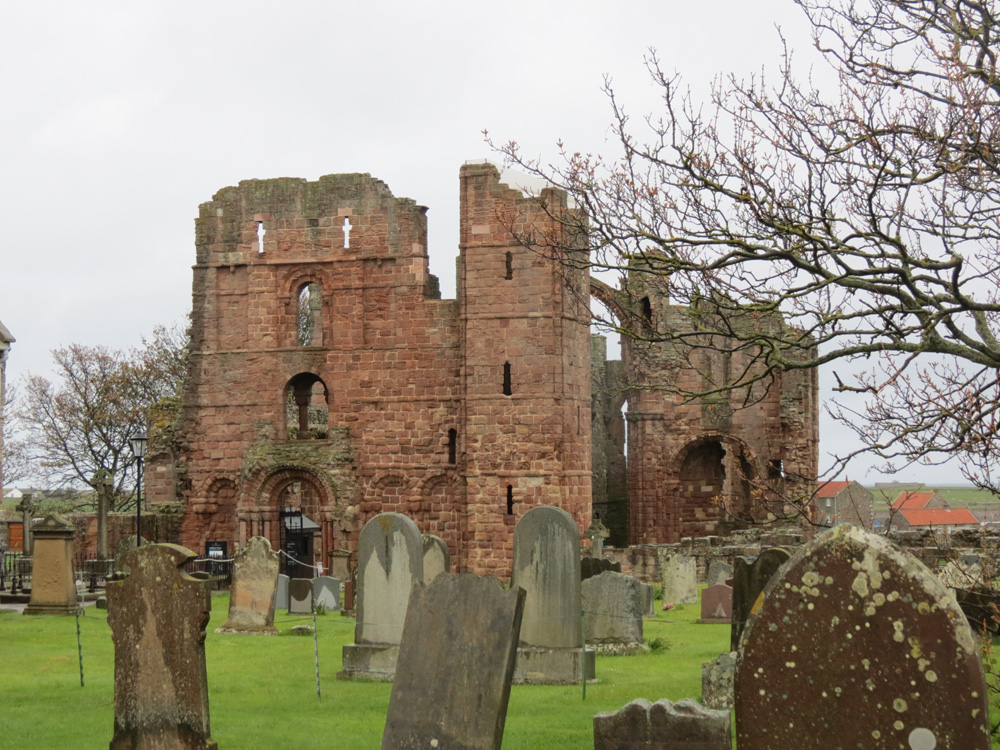
It is still a Christian site today. The graveyard links the priory with the newer St Marys Church.
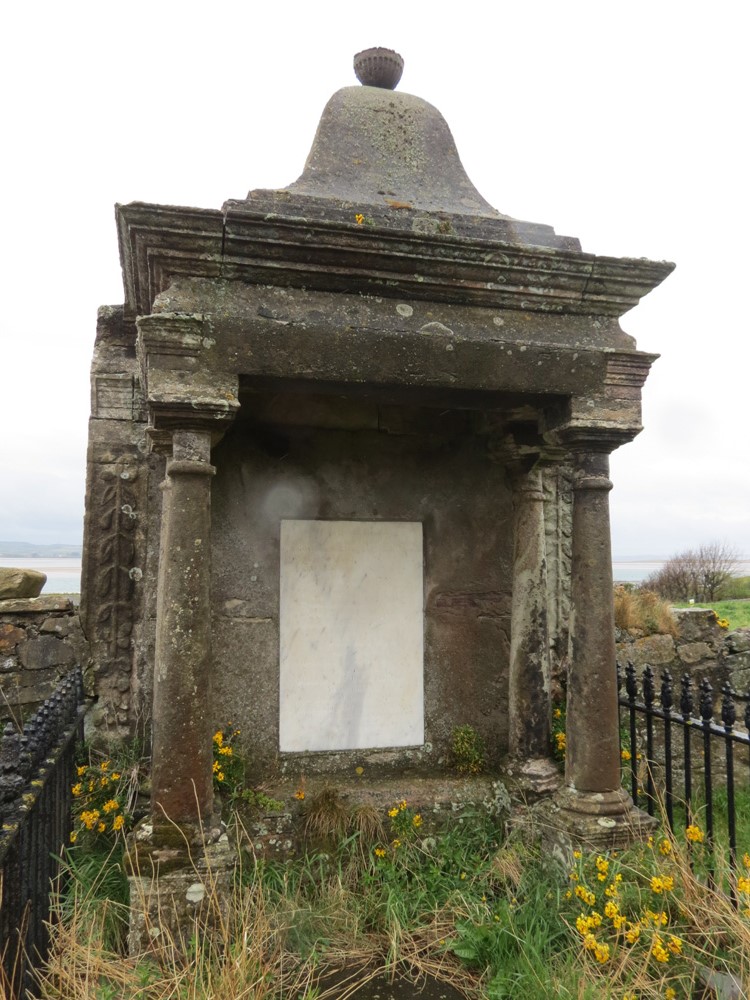
I will show you around there next time.
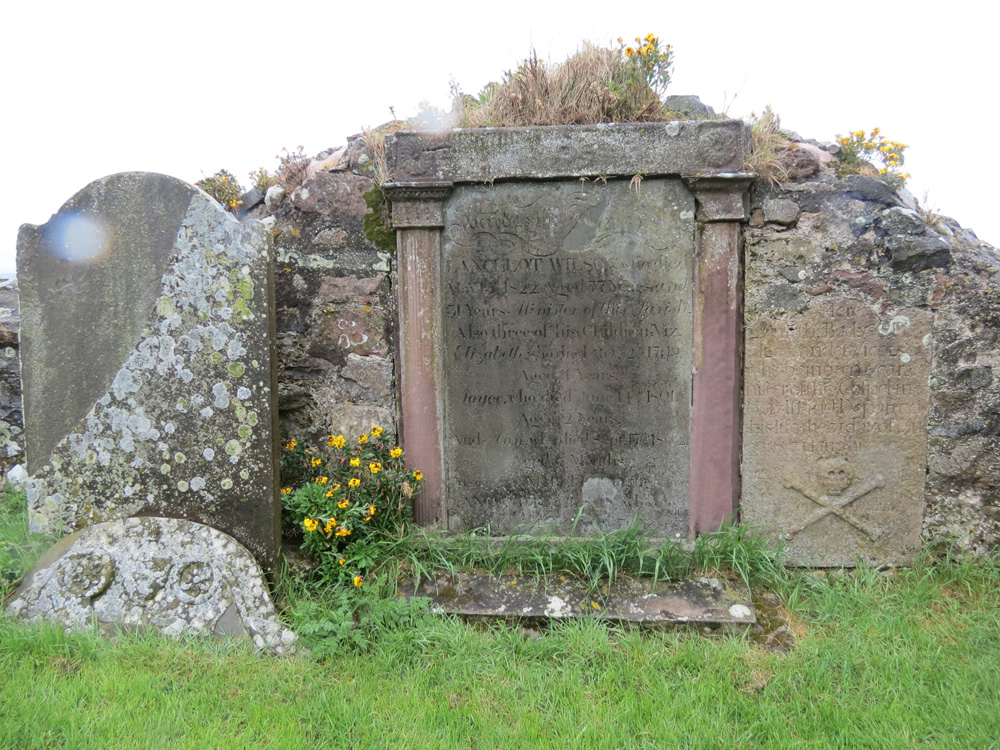
The gravestones are so varied.

A skull and cross bones wasn’t necessarily a pirate symbol.
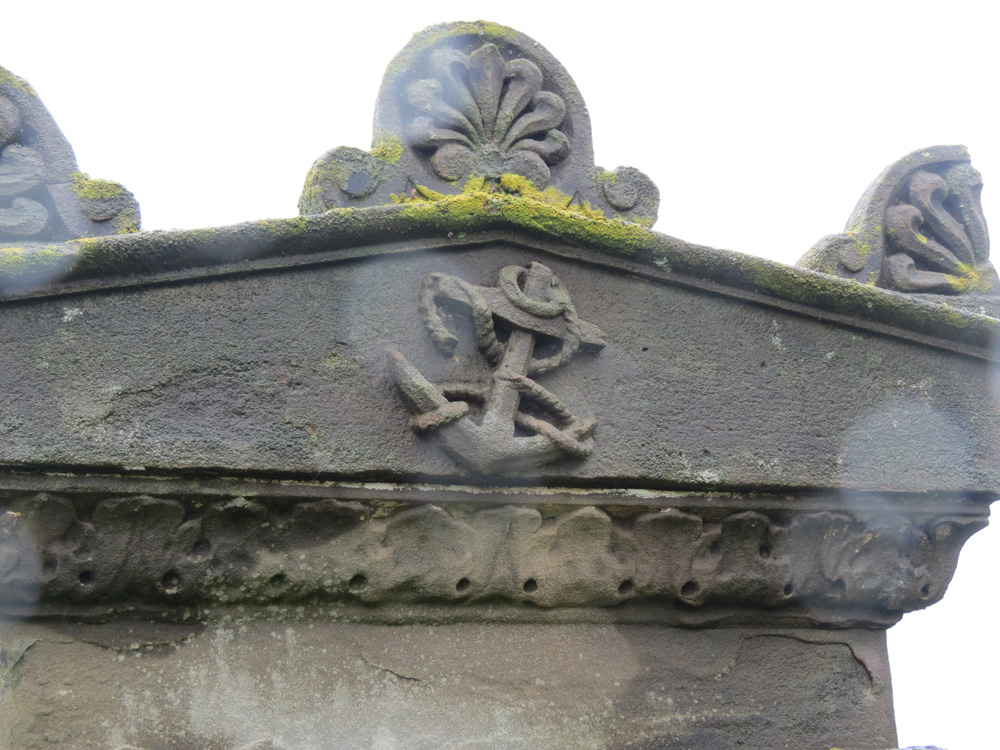
Reminders of the sea are never far away.
Posted in Travels by House Elf with 4 comments.
Road Trip -2 West-East borders.

Maybe the title of this post ought to have been “West to East and then some.”
We took little roads going through some towns which clearly had a “Scots Baronial” architectural influence.

But as this area is called the Scottish Borders, was it really surprising?

I kept having the words to “Flower of Scotland” running through my head.
O flower of Scotland
When will we see your like again
That fought and died for
Your wee bit hill and glen
And stood against him
Proud Edward’s army
And sent him homeward
Tae think again
The hills are bare now
And autumn leaves lie thick and still
O’er land that is lost now
Which those so dearly held
And stood against him
Proud Edward’s army
And sent him homeward
Tae think again
Those days are passed now
And in the past they must remain
But we can still rise now
And be the nation again
That stood against him
Proud Edward’s army
And sent him homeward
Tae think again.

You can hear it sung here.

Proud Edward was Edward II of England. He was forced to retreat by Robert the Bruce in the Battle of Bannockburn in 1314. The Scots only had 1/3 of the number of men compared to the English. 1/3 of those lost their lives. They are the flower of Scotland referred to in the song.

I can understand why they wanted to fight for their independence and the freedom they had. England had fought and lost against the same Norman-French less than 300 years earlier in 1066.

Who wouldn’t want to fight for this beautiful “wee bit hill and glen?”

This landscape is stunning!

We stopped on what is now the Scottish side for a picnic

by a musical stream.

We could have sat at a bench amongst the trees but when it rained we ran for the car.

I shared mine with a Chaffinch (Fringilla coelebs)

But let us head further east in what is now mainly England as the border isn’t a straight horizontal line- it heads North Easterly up to Berwick-Upon-Tweed.

Some views wouldn’t be out of place in the Cotswolds,

where-as some show the Scottish influence.

This pic is for you Ulla.

How I managed to take it as the car was travelling is a minor miracle. You can see the fisherman as the dot in this pic.

This church is on the high ground just to the right of the previous picture.

This is the 1st view of our next stop.
Can you guess where we are going?

The tidal causeway is a clue.

The tall posts mark a footpath called Pilgrims Way over the sand at low tide.

Give up? We’re heading to Holy Island and the village of Lindisfarne.

If you get caught out by the tide, you can take shelter in one of these huts.
If you are travelling by car, I would put my foot down!!!
We checked here so we could time our journey to cross at a safe time.

The village is very peaceful even with tourists.

The island smelled of wallflowers.

They seemed to grow like weeds in most walls.
The Legend of Wallflowers
• Robert Herrick ( 1591-1674), known as ‘The Cavalier Poet’, immortalized the wallflower in verse. He wrote about a tragic accident that occurred at Neidpath Castle on the banks of the River Tweed in Scotland. The Earl of March’s daughter, Elizabeth, had fallen in love with a young nobleman from a rival clan, Scott of Tushielaw. Her father wanted her to marry the future king of Scotland instead. The strong-willed Elizabeth refused and her father locked her up in the tower as a punishment. The handsome Scott disguised himself as a minstrel and serenaded her while they made plans to elope, but when the time came Elizabeth fell to her death, landing close to a sprig of wallflower growing along the tower’s wall. The broken-hearted Scott set off to wander through the land wearing a sprig of wallflower, and this flower still symbolizes faithful devotion.
‘Up she got upon a wall
Tempting down to slide withal
But the silken twist untied
So she fell, and bruis’d, she died.’
from “How the wall-flower came first, and why so called”,
by Robert Herrick.

So imagine that smell in the damp air (it rained hard as we crossed the causeway) as we walk through Lindisfarne village.

Some houses are holiday lets.

But the village has retained a quiet charm.

Next time we explore Lindisfarne Priory.
Posted in Travels by House Elf with 5 comments.